
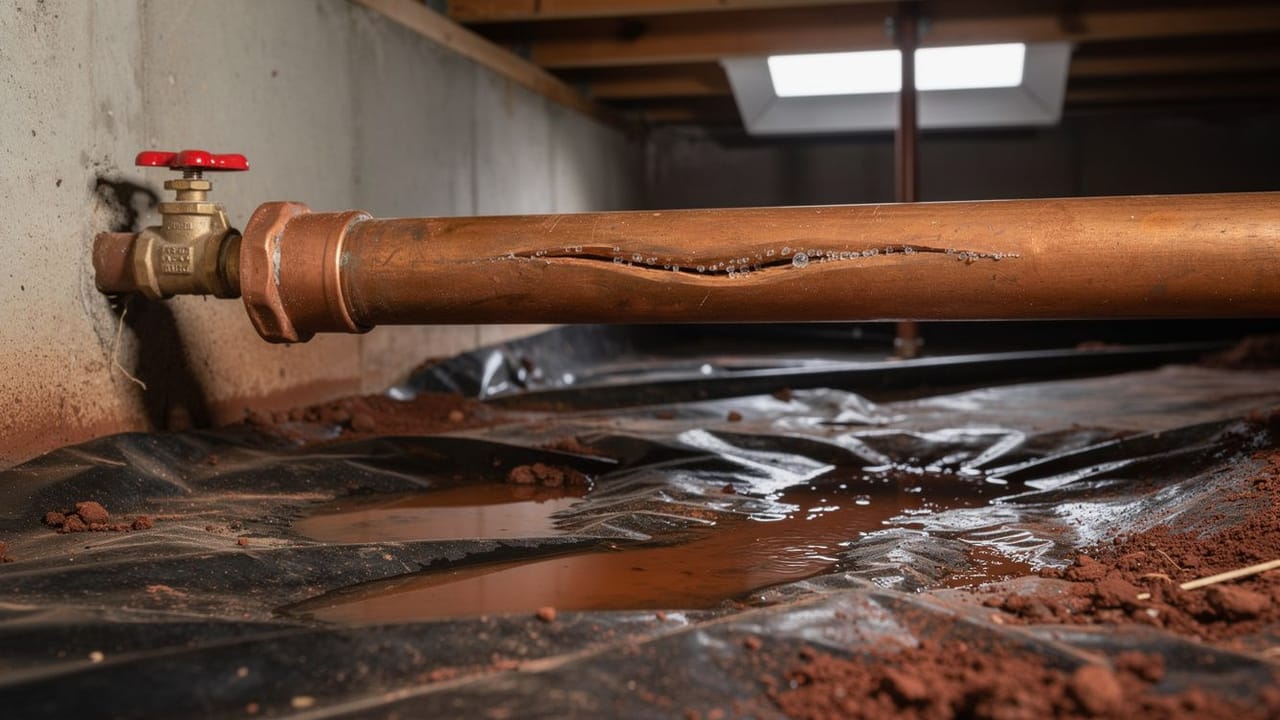
· by Michael Blair, Nashville's Plumbing Repair
A burst pipe rarely waits for a convenient hour. It is usually the first warm morning after a hard freeze, when the ice in a split line melts and water starts running out of a crawl space vent, down a garage wall or through a ceiling. What happens in the next hour decides how much of the floor gets ruined, whether the insurance claim holds up, and whether there is any relief on the water bill afterward. Our emergency plumbing service handles the repair; this post is the order of steps for the homeowner standing in the water before we get there.
What should you do in the first minutes after a pipe bursts?
Shut the water off at the main valve before anything else, because every minute it stays open adds gallons to the floor. The Tennessee Department of Commerce and Insurance’s 2016 frozen-pipe release puts it first on its list, and warns against trying to thaw any pipe until the main shut-off is closed.
In most houses the main valve sits where the water line comes in from the yard: on the crawl space wall facing the street, in the basement, in the garage, or near the water heater in a slab house. It may be a lever that turns a quarter turn or a round handle that takes several turns. If you cannot find it, or it is seized and will not move, Metro Water Services keeps a 24/7 emergency and leak line at 615-862-4600, option 3. Outside Davidson County many towns buy water from their own utility or a utility district, so the name printed on your bill is the one to call.
With the main closed, open a faucet at the lowest point in the house to let the trapped water drain out of the lines instead of the break. If water has reached outlets, light fixtures or the electrical panel, stay out of it and leave the power to an electrician or the power company. Then move what you can off the wet floor, but leave the damage itself where it is for now.
Should you make permanent repairs before the insurance adjuster comes?
No. Make the temporary repairs that stop more damage, and hold the permanent repair until your insurance company has seen it. The same 2016 state release tells homeowners to photograph or video the damage before any temporary repair, to keep receipts and the damaged property for the adjuster, and warns that an insurer may deny a claim when permanent repairs come first.
The department repeated that advice in its 2018 tips on choosing contractors and filing claims: take photographs and video, do what is needed to keep the property from further damage, and do not have permanent repairs made until the insurer has inspected and you have agreed on the cost. Both releases are several years old, and your own policy is what governs your claim, so read it or call your agent the same day.
One more line in the 2016 release is worth knowing before you call. A department spokesman said most insurers do not cover frozen-pipe damage that comes from negligence, such as not keeping the house warm enough when the owner could have. If the heat was off in an occupied house, expect the adjuster to ask about it.
What is the difference between a temporary and a permanent burst pipe repair?
A temporary repair stops the water so the rest of the house can be turned back on; a permanent repair replaces the failed pipe and checks the run it belongs to. On an emergency plumbing call our plumbers cut out the split section and either cap that branch or join the pipe with a repair coupling, which gives the house water again the same day. We keep the piece we cut out and hand it to you, because it is part of the damaged property an adjuster may want to see.
The permanent repair comes after the inspection. A freeze rarely damages only the one spot that opened, so we look at the length of pipe on either side of the split and test the system under pressure before closing anything up. The state’s 2016 release names crawl spaces, unheated rooms, basements, garages and exterior walls as the places pipes freeze, and those runs get the closest look. If the line is old galvanized steel or has broken more than once, repiping that section or the whole house can be the better spend than another patch, and our post on stopping frozen pipes in a Middle Tennessee winter covers what keeps the next cold snap from doing it again.
A break inside a wall or ceiling changes the order slightly. The drywall below it has to come open, both to reach the pipe and to let the cavity dry, and wet insulation comes out rather than drying in place. Photograph the stain and the opening before the cut goes any wider.
Will Metro Water credit the water you lost?
Only if the leak was concealed, and only after it has been repaired. Metro Water Services’ leak adjustment policy credits one month of water and sewer billing in a twelve-month period for a concealed leak that has been found and fixed, with an additional month of sewer credit when the repaired leak was underground. The sewer portion is credited because the water that ran out of the break never went down the sewer.
The timing matters. The policy says the repair has to be made within the second month’s billing period and the request submitted within 90 days of the repair date, so keep the invoice that shows when the work was done. A pipe that splits in a laundry room, where you can see the water and shut it off, is not the concealed leak the policy describes, so do not count on a credit for it. A break hidden inside a wall, under the floor or in the yard line is closer to what the policy covers; ask Metro which side of that line yours falls on.
Metro’s assistance and protection programs page adds two practical points: a field representative can help determine whether there is a leak if you call 615-862-4600, and a bill that comes due before an adjustment posts should be paid in full to avoid late charges. If the bill keeps climbing after the burst is fixed, a second leak may be hiding somewhere, and our leak detection service and the post on slab leak signs and repair choices cover how that gets found. For a written price on the permanent repair, ask us for a free estimate.
Sources
- Metro Water Services, Customer Care and Report an Emergency — The 24/7 emergency and leak line, 615-862-4600 option 3
- Tennessee Department of Commerce and Insurance, Avoid Home Damage from Frozen Pipes (2016) — Shut off the main first, photograph before temporary repairs, no permanent repairs before the adjuster, the negligence exclusion, freeze-prone locations
- Tennessee Department of Commerce and Insurance, Tips on Selecting Contractors, Filing Claims (2018) — Photograph the damage, prevent further damage, hold permanent repairs until the insurer inspects
- Metro Water Services, Leak Adjustments policy CSC201414 — Credit terms for concealed leaks after repair, the underground sewer month and the deadlines
- Metro Water Services, Assistance and Protection Programs — Field representative leak check and paying the bill in full before an adjustment posts
FAQ
What to Do First When a Pipe Bursts in Nashville — questions
What should I do first when a pipe bursts in my house?
Close the main water valve, usually where the line enters the house in the crawl space, basement, garage or near the water heater. If you cannot find it or it will not turn, call Metro Water’s 24/7 line at 615-862-4600, option 3. Then open a low faucet to drain the lines and photograph the damage.
Should I make permanent repairs before the insurance adjuster comes?
No. Tennessee’s Department of Commerce and Insurance advises photographing the damage, making only the repairs needed to prevent further damage, and holding permanent repairs until the insurer inspects and agrees on the cost. It warns a claim may be denied otherwise. Keep receipts and the damaged pipe for the adjuster to see.
Will Metro Water credit my bill after a burst pipe?
Only for a concealed leak that has been repaired. Metro’s policy gives one month of water and sewer credit in twelve months, plus a month of sewer for underground leaks, if the repair is made within the second billing period and the request sent within 90 days. A burst you could see may not qualify.
Can I fix a burst pipe myself with a temporary repair?
A temporary repair only has to stop the water so the house can be turned back on, and that is the right first step for the claim too. The permanent repair should wait for the adjuster, and it means replacing the split section, checking the pipe on either side of it and testing the system under pressure.
What do I do about a burst pipe inside a wall or ceiling?
Shut off the main, then photograph the stain before anything is cut. The drywall below the break has to come open to reach the pipe and let the cavity dry, and wet insulation is removed rather than left to dry. A hidden break like this is closer to the concealed leak Metro’s credit policy describes.