· by Michael Blair, Nashville's Plumbing Repair
When a drain gurgles on a dry Tuesday, we look for a clog or a venting problem first. When it only gurgles in a downpour, we start somewhere else: water that should be running off across the yard is probably finding its way into the sanitary line, and EPA’s page on sanitary sewer overflows names sewer defects that let stormwater and groundwater overload the system as one of the causes. There’s no one season for it here. The National Weather Service’s Nashville climate normals for 1991 to 2020 run from 3.36 inches in October to 5.02 in May, so a long soaking rain can arrive in any month. That same EPA page warns that an overloaded sanitary sewer can back up into homes, which is the reason to chase the gurgle down rather than live with it.
What makes a drain gurgle in heavy rain?
We read a rain-only gurgle as air on the move. The drains in a house are vented so air can get in and out of the pipes, and when the line below fills faster than it empties, the air in it has to escape somewhere. Often the nearest trap is the easiest way out, so the toilet water rises and bubbles. That’s our working explanation, and it’s why we don’t reach for a plunger on these calls.
The useful question is where the extra water is coming from: your own sewer lateral on its way to the street, or the public main. EPA’s answers on why sewers overflow list undersized sewers and pumps alongside leaky joints and connected sump pumps, so the main can be the pipe running full. Metro’s sewer use ordinance defines the building sewer as the pipe carrying wastewater from a property to the community sewer. Who repairs which part of it is the subject of our post on the sewer lateral, and Metro Water Services can confirm where its side ends at your address.
How rain gets into a sewer line
The first path is the pipe itself. EPA’s list of why sewers overflow includes stormwater and groundwater getting in through cracks and leaky joints, and tree roots working in through defects and openings in the line. On an older lot the joints of the lateral are the first place we look, and a camera run down the line is how we see them, roots and all, before recommending any repair.
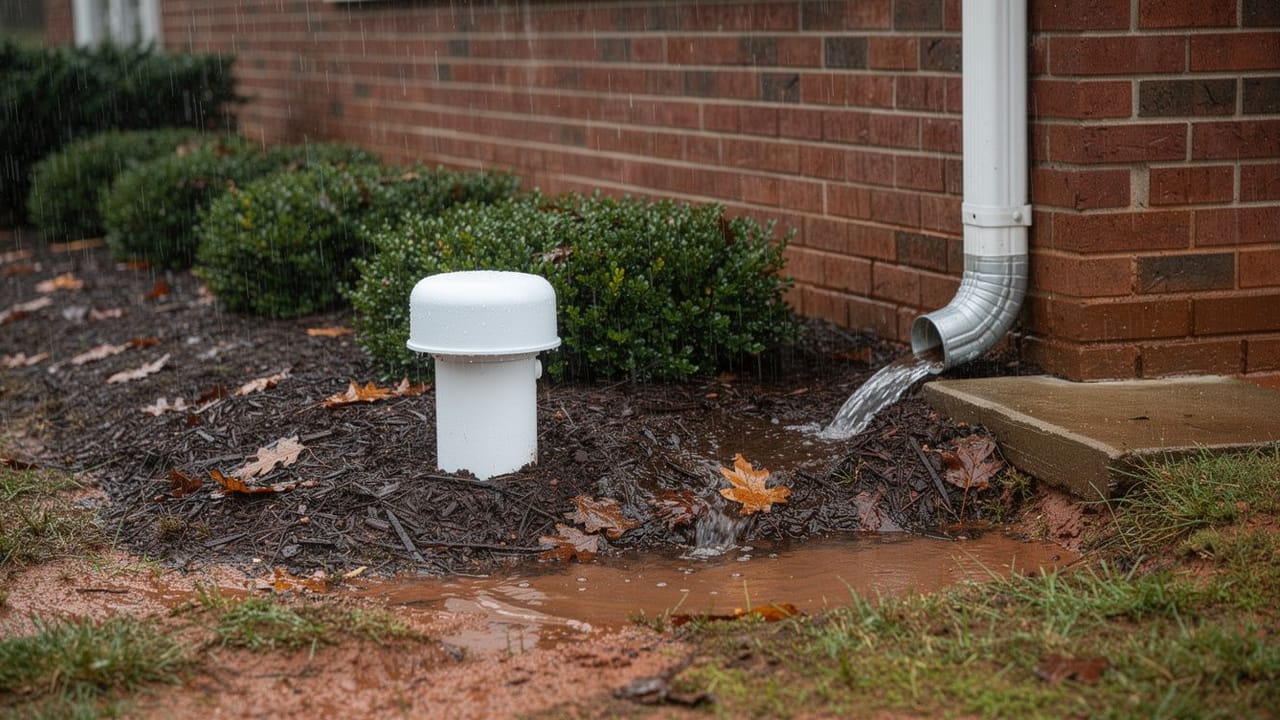
The other paths are ones somebody built. A downspout, a yard drain or a basement sump piped into the sewer sends rainwater straight in. Section 15.60 of Metro’s sewer use ordinance says unpolluted stormwater, groundwater, rooftop, basement and yard drainage shall not be connected to a community sewer unless no storm sewer or other reasonable alternative exists, and even then only under a discharge permit. We also check the cleanout cap for cracks or a missing cap, and we ask whether anyone has dug across the line lately for a fence post or an irrigation run.
- A cleanout cap that is cracked, missing or buried under the mulch
- A downspout or sump pump discharging into a pipe instead of onto the ground
- A yard, area or driveway drain piped into the sewer line
- Roots or open joints in an old lateral
Telling your line from the city main
Before anyone brings equipment, ask the neighbors. If houses on the same street gurgle or back up in the same storm, call it in: Metro Water Services takes reports of an overflowing sewer at 615-862-4600, 24 hours a day, according to its emergency service page. If it’s only your house, we start with your own line.
On a dry day we open the cleanout and look. If water is standing in it with nothing running in the house, we look downstream for a blockage or a low spot before we blame the rain. Either way, we’d rather run a camera inspection first than charge anyone to jet a line on the guess that roots are the whole story.
How do you stop drains gurgling when it rains?
Where a downspout or a sump is tied into the sewer, we disconnect it and send the water out onto the ground or to a proper storm drain, and Metro’s ordinance already lists roof runoff and subsurface drainage among its prohibited discharges. A damaged cleanout cap gets replaced and set where surface water won’t pool over it. Water coming in through the joints of the lateral is fixed by digging up and replacing the bad sections or by lining the pipe from inside, and the camera footage decides which; our sewer line page goes through both.
Where the public main is the one backing up, homeowners ask about a backwater valve, a valve on the lateral meant to let wastewater leave and keep it from coming back in. Whether one makes sense depends on where your lowest drains sit compared with the main, and we’d want to see the house before saying. Installing one is plumbing work, and plumbing in Davidson County answers to the 2024 International Plumbing Code as Metro adopted it, local amendments included. Plumbing trade permits go through Metro Codes’ trades permit office, where a licensed contractor files online and anyone else applies at the Department of Codes and Building Safety. Our post on Nashville plumbing permits covers which jobs need one.
The case for acting before the next storm is the cleanup. EPA’s sewer overflow questions page says a basement flooded with sewage must be thoroughly cleaned and disinfected, and that rugs, flooring, wallboard and upholstered furniture that touch sewage usually have to be replaced. If your drains gurgle every time it pours, ask us for a camera inspection during a dry week.
Sources
- U.S. EPA, Sanitary Sewer Overflows (SSOs) — Sewer defects let stormwater and groundwater overload the system; overflows can back up into homes
- U.S. EPA, Sanitary Sewer Overflow (SSO) Frequent Questions — Tree roots, leaky joints, connected sump pumps, roof leaders and area drains, undersized sewers; basement cleanup and what usually must be replaced
- NOAA National Weather Service Nashville, Nashville climate (1991-2020 normals) — Monthly normal precipitation: October 3.36 in (driest), May 5.02 in (wettest)
- Metro Nashville, Sewer Use Ordinance Section 15.60 — 15.60.100 bars connecting stormwater, groundwater, rooftop, basement and yard drainage to a community sewer, with an exception; 15.60.080 lists roof runoff and subsurface drainage as prohibited discharges
- Metro Nashville, Sewer Use Ordinance Title 15.04 Definitions — 15.04.070 definition of building sewer
- Metro Water Services, Request Emergency Service — Report an overflowing sewer at 615-862-4600, 24 hours a day, 7 days a week
- Metro Nashville Codes, Adopted Codes List — Metro adopted the 2024 International Plumbing Code with local amendments
- Metro Nashville Codes, Trades Permits — Licensed contractors with an e-permit account apply for trade permits online; others apply at the Department of Codes and Building Safety
FAQ
Why Your Drains Gurgle Every Time It Rains — questions
Why does my toilet bubble when it rains hard?
Most likely the sewer line is running fuller than usual during the storm. The EPA lists stormwater and groundwater getting in through cracked pipe or leaky joints, and sump pumps, roof leaders and area drains connected to the sanitary sewer, among the things that overload a sewer line. A bubble that only shows up in heavy rain points us toward one of those, or toward an overloaded public main, before a clog.
Is sewage backing up in a storm my responsibility or the city’s?
Metro’s sewer use ordinance defines the building sewer as the pipe carrying wastewater from a property to the public sewer, and Metro Water Services can confirm where its responsibility ends on that pipe at your address. If the public sewer is overflowing, report it to Metro Water Services at 615-862-4600, which takes those reports 24 hours a day. If the water is getting in on your own line, a camera inspection shows where.
Will jetting the sewer line stop the gurgling?
It helps when something is blocking the line, such as tree roots, which the EPA lists as a cause of sewer blockages. Jetting cleans the pipe; it does nothing to seal a crack or a leaky joint that lets groundwater in, so we put a camera in the line before recommending it.
Is a gurgling drain dangerous?
The sound itself is only air, but a gurgle that comes with every storm warns that the sewer line is running full, and the EPA says an overloaded sanitary sewer can back up into homes. A basement flooded with sewage then has to be cleaned and disinfected, and flooring, wallboard and upholstered furniture it touched usually get replaced.