
· by Michael Blair, Nashville's Plumbing Repair
The sound is easy to recognize once you know it: the fill valve opens briefly and then shuts, with nobody near the bathroom, sometimes every few minutes and sometimes hours apart. Fluidmaster’s page on toilet refill sounds says a toilet that refills without being flushed is usually losing water, most often from the tank into the bowl, and the company calls the result ghost flushing. Nothing is flushing. Water is slipping past a seal slowly enough that you never see it move, and every so often the level drops far enough to call for a refill. The EPA’s Fix a Leak Week page says an old or worn flapper can make a toilet flush on its own or silently leak thousands of gallons a year. It is one of the cheaper plumbing problems to fix, provided the right part gets replaced.
How do you find where a toilet is leaking?
Put a few drops of food coloring in the tank and do not flush. The same EPA page says that any color in the bowl after 10 minutes means a leak, and to flush right after the test so the dye does not stain the tank. A very slow leak can take longer than that to tint the bowl, so we give it a while before calling a toilet sound. Color in the bowl means water is getting past the flapper or the seat it closes against. The Fluidmaster guide to a toilet running constantly offers a second check: with the tank full, turn off the supply, mark the water level, and see whether it has dropped after 10 to 15 minutes.
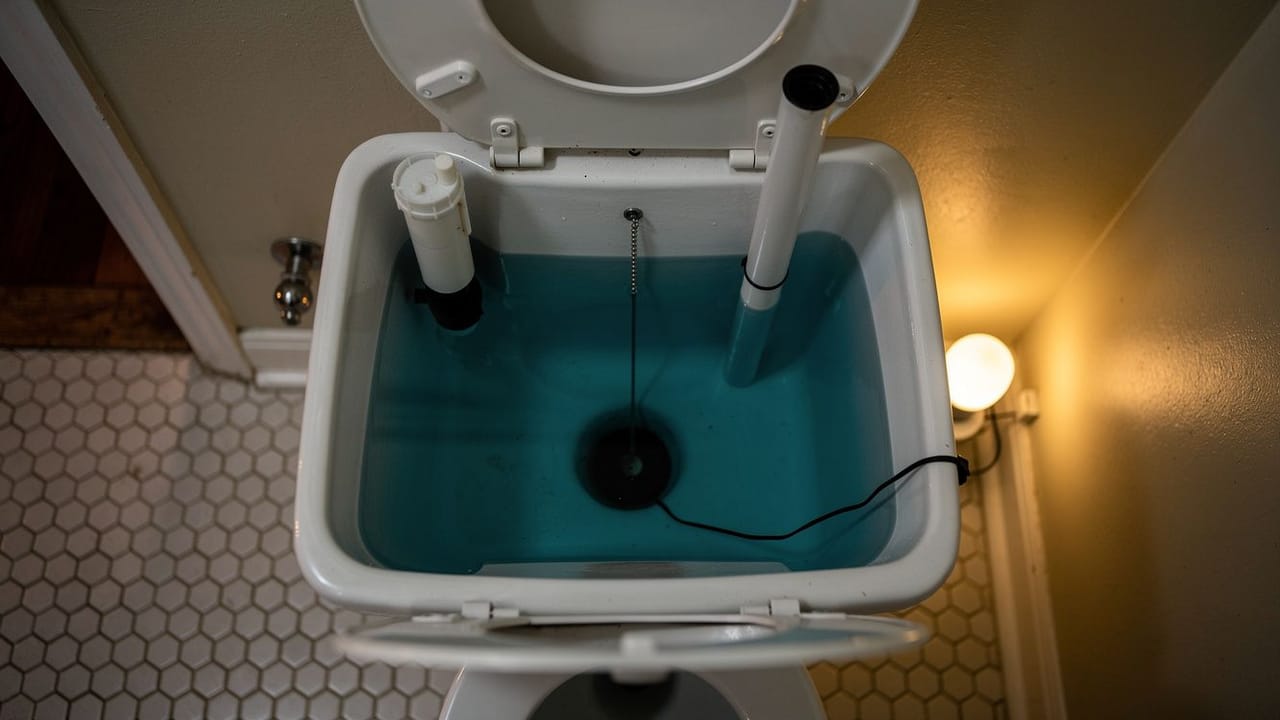
No color in the bowl but the tank still refilling sends you to the other side of the tank. Look at the thin refill tube that runs from the fill valve to the overflow pipe. Fluidmaster says that if it has been pushed too far down into the overflow pipe, it should be pulled out and reattached to the outside, and the Fluidmaster 400AKR installation instructions warn that shoving the tube down the overflow pipe causes water loss.
Then check the water level. It should sit below the top of the overflow tube. Fluidmaster’s first step for a running toilet is to look for water rising so high that it drains into the overflow pipe, and if it is, to clean the fill valve and replace it if cleaning does not cure it. Water that goes down the overflow ends up in the bowl, the same place a leaking flapper sends it.
The flapper, and what Nashville water has to do with it
The flapper is the rubber seal at the bottom of the tank that lifts when you flush and drops to close the outlet. The EPA WaterSense page on residential toilets says most toilet leaks come from old or worn-out flappers, and the Fix a Leak Week page adds that because the rubber wears out, a flapper should be checked from time to time and replaced at least every five years. Before buying one, Fluidmaster suggests looking it over for damage or debris and wiping both the flapper and the flush valve surface it seals against.
As for the water itself, Metro’s 2025 Consumer Confidence Report says Nashville tap water is disinfected with a small amount of bleach, with chlorine averaging 1.60 parts per million, and that its hardness, about 100 mg/L in the 2023 data, comes from limestone deposits in Tennessee and eastern Kentucky and is not removed in treatment. That sits right at the line the report draws between medium hard and hard. We have not found research tying either one to how long a flapper lasts, so we would not blame the tap water for one that failed. In-tank cleaning tablets are another matter. Fluidmaster warns in capital letters against drop-in bowl cleaners containing bleach or chlorine, saying they damage tank components, can cause flooding and void its warranty. If there is a tablet in your tank, check what it is made of.
A flapper is an inexpensive part, made of rubber, plastic or silicone according to the EPA, but it has to be the right one. Fluidmaster sells different flappers for toilets with 2-inch and 3-inch flush valves, and the EPA suggests taking the old flapper, or a picture of it, to the hardware store, paying attention to its width and to any foam float that may need replacing too. The model number or the owner’s manual answers the same question.
What if a new flapper doesn’t stop the leak?
If a new flapper does not stop the drain-down, the seat it rests on is the next suspect. That seat is part of the flush valve, and Fluidmaster’s running toilet guide says that when the tank still drains after a new flapper, replacing the flush valve is what will stop it. That means lifting the tank off the bowl. The 400AKR instructions have the tank set back on its gasket and the hex nuts on the tank bolts tightened evenly until the tank is snug on the bowl. It is a bigger job than a flapper, and it is the kind of toilet repair our fixture and toilet service takes on.
A fill valve that will not shut off fully keeps the level creeping up to the overflow, and the manufacturer’s order is to clean it first and replace it if that fails. On the 400AKR the height is set by hand, by turning the lower shank in or out of the valve body. The same sheet says the valve’s critical level mark must sit one inch above the top of the overflow pipe and calls that a plumbing code requirement, which is a mark on the valve, not the water line.
- Dye test first, so you replace the part that is actually leaking
- Set the water level to the manufacturer’s mark, below the top of the overflow tube
- Match the flapper to the toilet, not the shelf
- Turn the supply off at the wall before opening anything
How much water does a leaking flapper waste?
A slow flapper leak can move thousands of gallons a year without a single visible drip, by the EPA’s estimate, and Metro Water Services charges both water and sewer on your actual meter reading, as its page on understanding your bill explains. Under Metro’s 2026 water and sewer rates, the first 2 CCF a month are included in the fixed charge. Past that, a household pays $4.20 to $6.31 per CCF for water, rising with use, plus $7.02 per CCF for sewer, and one CCF is 748 gallons. So the waste is charged twice. A bill that has climbed with no change in habits is worth a dye test in every toilet in the house before assuming anything more serious, and if every toilet passes and the meter still moves, our post on slab leak signs and repair choices covers the next tests.
If the toilet is old enough that parts no longer match, or it runs, rocks or needs a second flush, a new toilet can be a better spend than a third round of parts. The EPA says older toilets can use as much as 6 gallons per flush, against a federal standard of 1.6 gallons and 1.28 gallons or less for WaterSense labeled models, and estimates that replacing old toilets with WaterSense models can save an average family nearly 13,000 gallons and more than $170 a year in water costs. Those are national averages, not a Nashville bill. When you would rather have someone look at it, ask us for a free estimate.
Sources
- EPA WaterSense, Fix a Leak Week — Worn flappers flush on their own or leak thousands of gallons a year; the 10-minute food coloring test; replace flappers at least every five years; bring the old flapper to the store
- EPA WaterSense, Residential Toilets — Most toilet leaks are worn flappers, an inexpensive part; 6, 1.6 and 1.28 gallons per flush; average family savings from WaterSense toilets
- Fluidmaster, Toilet Making Refill Sounds — A refill without a flush means the toilet is losing water; ghost flushing; refill tube pushed into the overflow pipe; wipe the flapper and flush valve
- Fluidmaster, Toilet Running Constantly — Water draining into the overflow pipe and the fill valve fix; the mark-the-level test; 2-inch and 3-inch flappers; replace the flush valve if a new flapper fails; no bleach or chlorine tank cleaners
- Fluidmaster, 400AKR installation instructions (2016) — Do not push the refill tube down the overflow pipe; height adjusted by hand; critical level mark one inch above the overflow pipe; tank nuts tightened evenly until snug
- Metro Water Services, 2025 Consumer Confidence Report — Chlorine disinfection averaging 1.60 ppm; hardness about 100 mg/L (2023 data) from limestone, not removed in treatment
- Metro Water Services, Understanding Your Bill — Water and sewer charges both based on the actual meter reading
- Metro Water Services, Water, Sewer and Stormwater Rates — 2026 residential water and sewer rates per CCF; first 2 CCF in the fixed charge; 1 CCF is 748 gallons
FAQ
Why Your Toilet Refills by Itself at Night — questions
Why does my toilet run for a few seconds and then stop?
Water is leaving the tank, usually past a worn flapper, until the level drops enough for the fill valve to top it up. A dye test confirms it: a few drops of food coloring in the tank, no flushing, and any color in the bowl after about 10 minutes means a leak. If no color appears, check whether the refill tube has been pushed down into the overflow pipe and whether the water level is high enough to spill into it.
Can a running toilet raise my water bill a lot?
It can. The EPA says a worn flapper can silently leak thousands of gallons a year, and Metro Water Services bills sewer as well as water on the metered reading, so water lost past the flapper is charged on both. It is one of the first things to check when a bill jumps without explanation.
Should I fix it myself or call a plumber?
The EPA calls replacing a flapper a quick and easy fix, and a fill valve is a reasonable job for most homeowners with the supply turned off. A flush valve replacement means taking the tank off the bowl and resetting the gasket, bolts and nuts, which have to be tightened evenly until the tank is snug. If that is more than you want to take on, it is worth calling a plumber.
Can a toilet flush by itself?
Not really. What sounds like a flush is the fill valve refilling a tank that has been slowly losing water, usually past a worn flapper, and Fluidmaster calls this ghost flushing. The EPA says an old or worn flapper can make a toilet seem to flush on its own.